
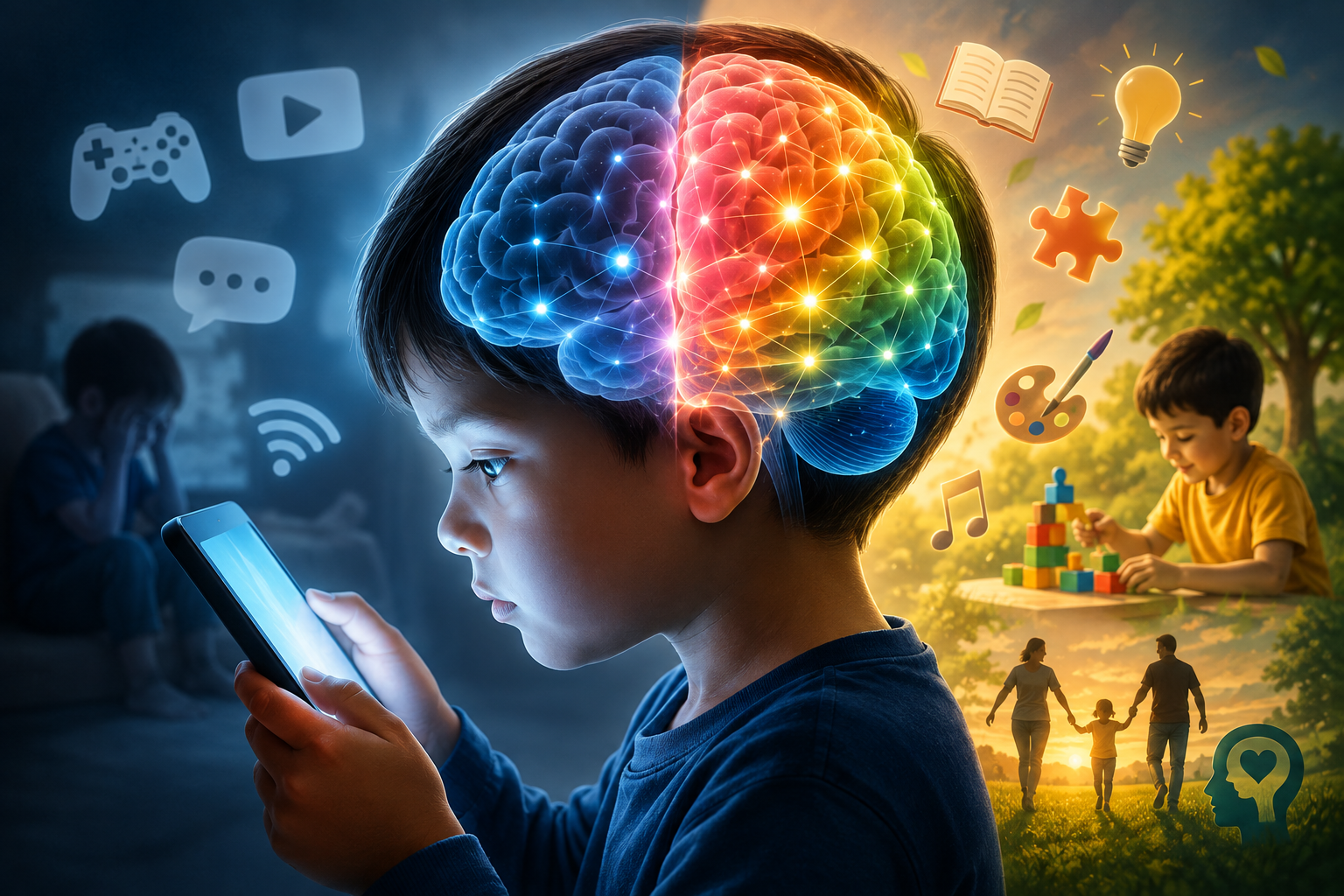
Digital screens are now part of childhood. Children use phones, televisions, tablets and computers for education, communication and entertainment. These technologies can be helpful, but parents often worry that too much screen time may “damage” their child’s brain. As a clinical psychologist, I prefer the more accurate word influence rather than damage. Current research does not show that ordinary screen use permanently damages every child’s brain. However, excessive, poorly supervised or age-inappropriate screen use may interfere with sleep, language development, attention, emotional regulation, physical activity and family interaction. The effect depends not only on the number of hours, but also on: The child’s age and developmental needs The type and quality of content Whether the child watches alone or with a caregiver When and where screens are used What healthy activities screen time replaces The child’s individual vulnerabilities Why Are the Early Years So Important? A child’s brain develops rapidly during the early years. Development is supported by real-world experiences such as: Face-to-face conversation Physical movement and outdoor play Exploring objects through touch Pretend and creative play Listening to stories Solving age-appropriate problems Warm interaction with caregivers Regular, restorative sleep A screen cannot fully replace these experiences. Young children learn especially well through responsive human interaction: observing facial expressions, taking turns in conversation, moving their bodies and receiving immediate feedback. The greatest concern is therefore often not the screen itself, but what prolonged screen use displaces. How Can Excessive Screen Time Affect Children? 1. Language and communication Children learn language through repeated, responsive interaction. When a child makes a sound, points at something or tries to speak, an adult responds and expands the communication. Passive videos generally provide less personalised feedback. If screens regularly replace conversation, storytelling and shared play, language-learning opportunities may decrease. Educational content can be useful, especially for older children, but young children benefit more when a caregiver watches with them, explains what is happening and connects it to everyday life. 2. Attention and self-control Many digital platforms use rapid scene changes, bright stimulation, autoplay and immediate rewards to maintain attention. A child may become accustomed to frequent novelty and find slower activities—such as reading, writing, classroom listening or completing puzzles—less immediately rewarding. This does not mean that screens automatically cause ADHD. ADHD is a complex neurodevelopmental condition and should not be diagnosed based on screen habits alone. Nevertheless, heavy or poorly regulated screen use may worsen attention and behavioural difficulties in some children. 3. Sleep Sleep is essential for memory, learning, mood and healthy development. Screen use can affect sleep by: Delaying bedtime Increasing mental or emotional stimulation Exposing children to frightening or exciting content Encouraging “just one more video” Allowing notifications to interrupt rest Keeping devices available in the bedroom Research generally links greater screen exposure—particularly near bedtime—with later sleep and poorer sleep outcomes, although the strength of this relationship varies among studies. 4. Emotional regulation Children gradually learn to tolerate boredom, frustration and disappointment. If a device is offered every time a child cries, waits, eats or becomes restless, the child may have fewer opportunities to practise managing ordinary discomfort with caregiver support. Screens should not become the only calming strategy. Children also need to develop skills such as: Naming their emotions Asking for help Waiting briefly Using words rather than aggression Breathing and settling Engaging in play Seeking comfort from trusted adults This does not mean parents must never use a screen during a difficult moment. Occasional use is different from making it the child’s primary method of emotional regulation. 5. Mood and behaviour Some children become irritable when screen use ends, particularly when the content is highly stimulating or the limits are unpredictable. Older children and adolescents may also experience online comparison, cyberbullying, exposure to disturbing material or pressure to remain constantly connected. Warning signs of problematic use can include: Frequent arguments about devices Loss of interest in other activities Secretive use Difficulty stopping Declining school performance Reduced family interaction Persistent sleep disturbance Screen use despite clear negative consequences Significant distress when a device is unavailable These behaviours should be understood in context. Sometimes excessive use is a coping response to loneliness, anxiety, depression, learning difficulties or family stress. 6. Physical health Long periods of sedentary screen use may replace physical activity. It can also contribute to poor posture, neck or back discomfort, headaches and eye strain. Screen use during meals may reduce awareness of hunger and fullness. Regular exposure to advertisements may also influence children’s food preferences. Encourage movement, outdoor play and regular breaks rather than relying only on strict time calculations. 7. Learning and academic functioning Screens can support learning when they are used intentionally. Interactive lessons, creative applications, supervised research and assistive technology can offer real benefits. Problems arise when entertainment use interrupts homework, encourages constant multitasking or replaces reading and independent problem-solving. Notifications and rapid switching between applications can make sustained concentration difficult. For school-aged children, distinguish between: Educational screen use Creative use Communication Passive entertainment Social media Gaming An hour spent creating a presentation is not developmentally identical to an hour of endlessly scrolling short videos. Does Screen Time Change the Brain? Some neuroimaging studies have found associations between higher screen exposure and differences in brain regions or networks involved in language, attention, executive functioning and emotional regulation. However, these findings must be interpreted carefully. An association does not prove that screens caused the difference. Factors such as sleep, family stress, socioeconomic circumstances, parenting practices and a child’s existing developmental characteristics may influence both screen use and developmental outcomes. Research also suggests that certain structured and interactive digital activities may support specific abilities, including visual-spatial or problem-solving skills. The scientific picture is therefore more complex than “screens destroy the brain.” Duration, timing, content, context and the child’s needs all matter. Practical Screen-Time Guidance by Age Babies younger than 18 months Avoid routine screen media other than video calls with a responsive adult. Babies learn best through face-to-face interaction, movement and sensory exploration. Background television should also

Somatic Therapy: Benefits, Techniques and Safety
Learn what somatic therapy is, how it includes bodily awareness in psychological care, who may benefit, and its evidence and safety limitations.
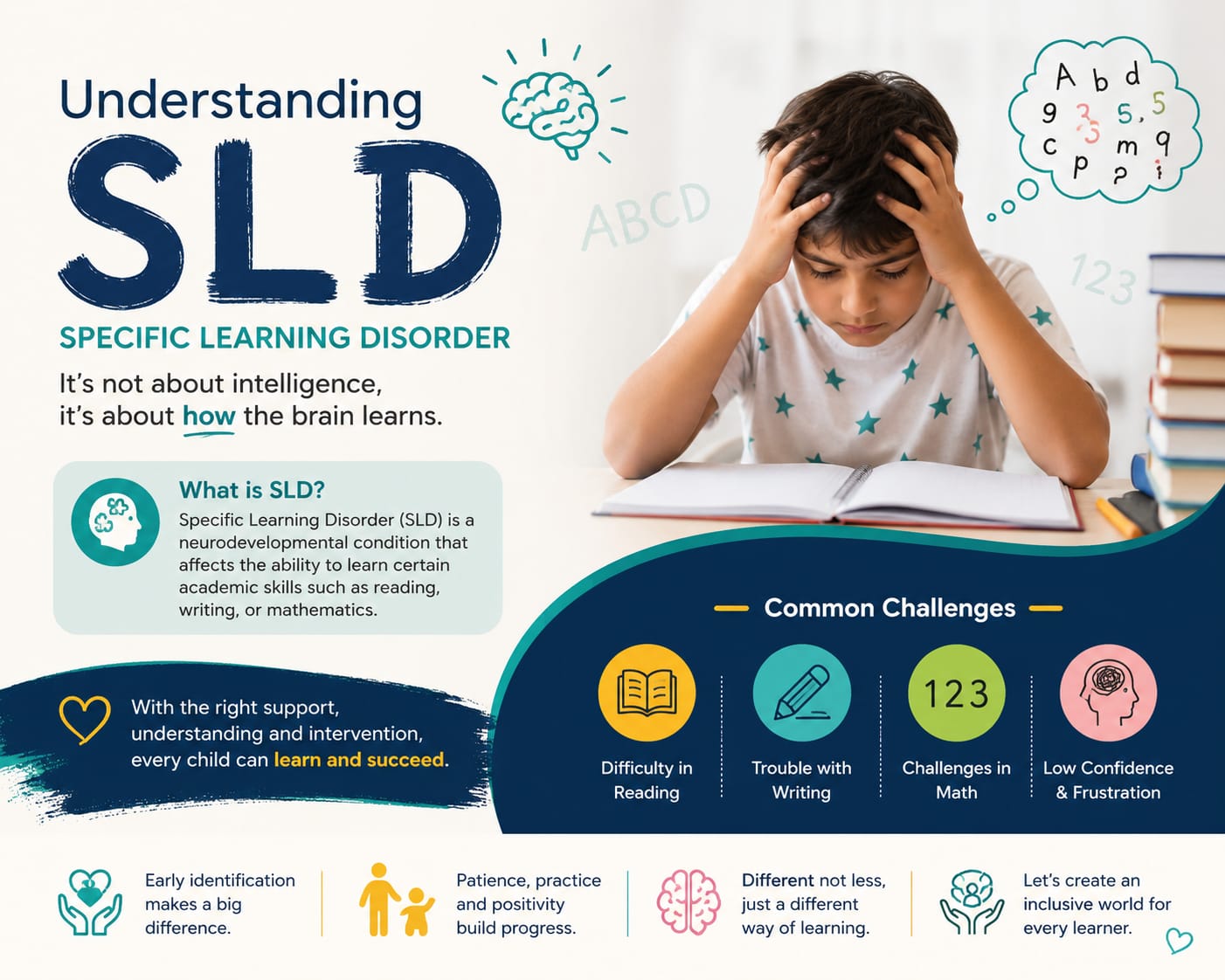
స్పెసిఫిక్ లెర్నింగ్ డిసార్డర్ (SLD): లక్షణాలు, అంచనా మరియు సహాయం
స్పెసిఫిక్ లెర్నింగ్ డిసార్డర్ పిల్లల చదవడం, రాయడం లేదా గణిత నైపుణ్యాలను ప్రభావితం చేయవచ్చు; అది తెలివితేటల లోపం కాదు. లక్షణాలు, నిపుణుల అంచనా మరియు సమర్థవంతమైన సహాయం గురించి తెలుసుకోండి.
Understanding Specific Learning Disorder (SLD): Signs, Assessment and Support
Specific Learning Disorder can affect a child’s reading, writing or mathematical skills without affecting intelligence. Learn about common signs, professional assessment and effective support.

How Counseling Can Transform Relationships and Family Life
Healthy relationships are the foundation of a happy life. However, stress, communication gaps, and misunderstandings often create conflict between couples and families. This is where counseling plays a transformative role. At Minds Clinic, we provide individual, couple, family, and group counseling to help people express themselves, resolve conflicts, and build stronger emotional connections. Counseling not only helps in solving immediate issues but also equips individuals with tools to handle future challenges with maturity and empathy. Whether it’s pre-marital counseling for couples starting a new journey or geriatric counseling to support senior citizens, our goal is to bring harmony, balance, and understanding into relationships. 💡 A healthy mind leads to healthy relationships — and a happier family life.

Breaking the Stigma Around Mental Health in India
In India, mental health is often surrounded by silence, shame, and stigma. Many people hesitate to seek help because of societal perceptions. But just like physical health, mental health needs regular attention and care. At Dr. Anusha Reddy Minds Clinic, we believe that seeking therapy or counseling is a sign of strength, not weakness. With scientifically proven therapies like CBT, DBT, and ACT, individuals can manage stress, overcome depression, cope with anxiety, and build healthier relationships. By creating awareness, engaging in community programs, and encouraging open conversations, we aim to normalize mental health care and make it a part of everyday life. ✨ Let’s replace silence with support, and stigma with understanding.

Understanding the Importance of Early Psychological Assessments in Children
Childhood is a crucial stage for emotional, cognitive, and social development. Often, parents notice changes in their child’s learning, behavior, or emotions but delay seeking professional help. Early psychological assessments can make a world of difference. At Minds Clinic, we use standardized developmental, intelligence, and behavioral tests to understand each child’s unique strengths and challenges. Identifying conditions like learning disabilities, ADHD, autism, or emotional difficulties early allows for timely intervention, which improves both academic performance and overall well-being. 💡 Remember: Early detection leads to early support — helping children grow with confidence and resilience.